



Industrial Machine Vision for the Pharmaceutical Industry
Automated quality inspection in regulated production processes

Pharmaceutical primary packaging and drug delivery systems must be inspected reliably at the relevant process stages – often inline, at high production speeds and under regulated manufacturing conditions.
OCTUM develops and integrates customized machine vision and AOI systems for the automated quality inspection of vials, ampoules, prefilled syringes, cartridges and other pharmaceutical products.
The inspection solutions are tailored to the product, the relevant quality characteristics, the production rate and the conditions within the filling, closing, assembly, labeling or packaging line.
For manufacturers, this means greater process reliability, consistent product quality and traceable inspection results. Depending on the application, requirements arising from GAMP 5, EU GMP Annex 11 and Annex 15 as well as 21 CFR Part 11 can be taken into account.

Any questions?
Get directly in touch with our
experts on +49 7062 91494-0
or write to us using our contact form
Inspection Solutions for Pharmaceutical Products
Our inspection solutions cover the following areas:
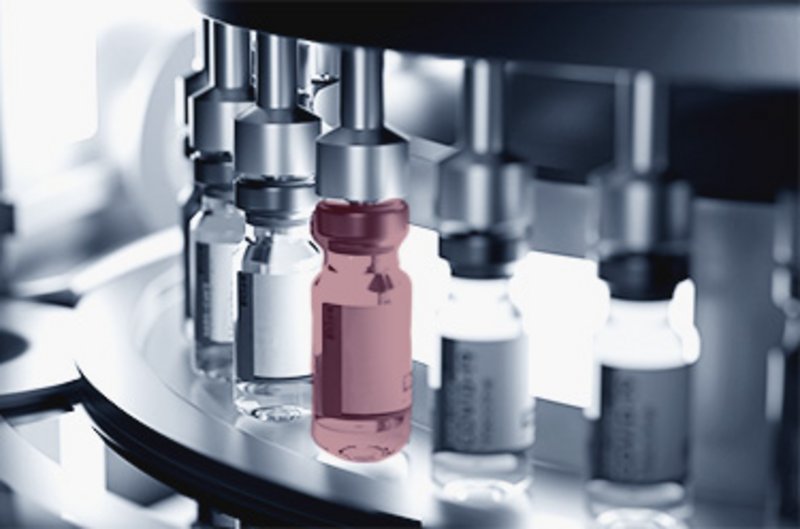
Inspecting vials before and after filling
vial.inspect is a modular inspection system for the automated inline inspection of vials in pharmaceutical filling and closing processes.
Depending on the application, different inspection stations can be combined:
- Empty-vial inspection before filling
- Inspection of the vial base and mouth
- Inspection of stopper position and closure
- Inspection of crimp caps and flip-off caps
- Print, OCR and OCV inspection
- Reading and verification of 1D and 2D codes
- Inspection of different formats and product variants
The modules are configured to suit the vial format, machine concept, production rate and inspection objective.
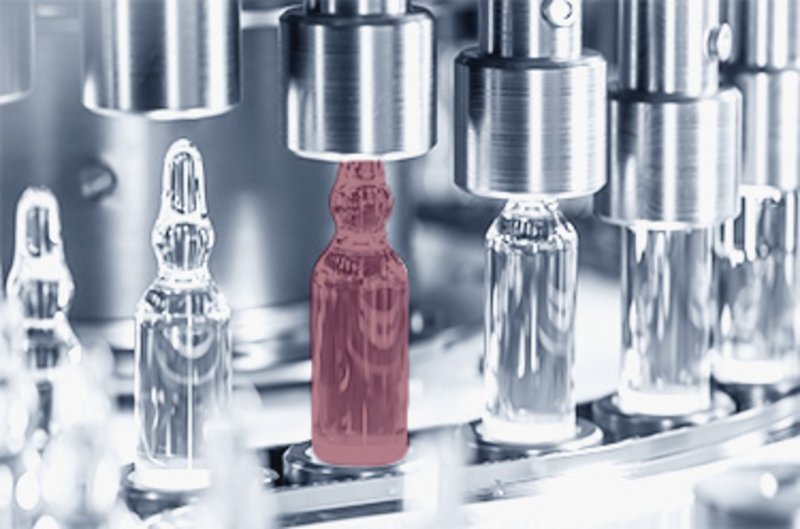
Inspecting ampoules after sealing
ampoule.inspect inspects ISO ampoules immediately after sealing and cooling. This allows relevant deviations to be detected before the ampoules are processed further or packaged.
Possible inspection characteristics include:
- Open or incompletely sealed ampoules
- Breakage and damage
- Deformations
- Irregularities in the sealing area
- Visible surface defects
- Geometrical deviations
- Print, human-readable text and codes
The inspection solution is adapted to the ampoule format, glass color, machine speed and installation conditions.
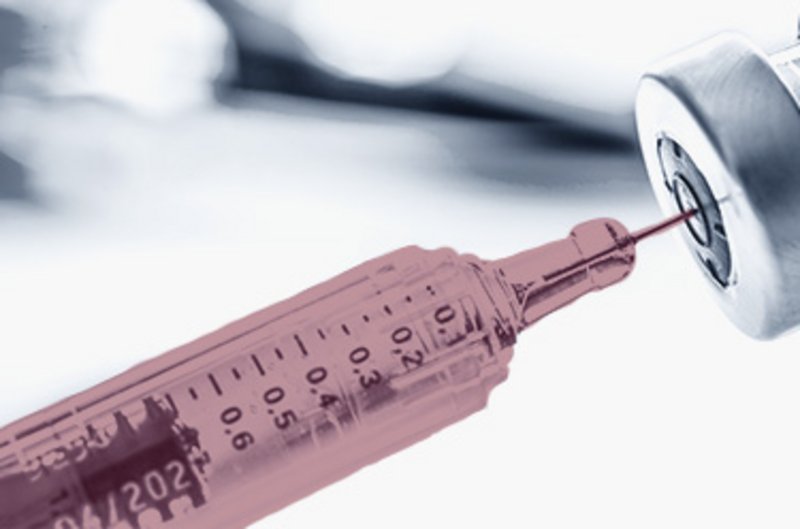
Inspecting prefilled syringes
Syringes and syringe components can be inspected during assembly, filling, closing, labeling and packaging processes.
The modular inspection systems can be configured for glass and plastic syringes as well as different designs and product variants. Typical inspection tasks include:
- Presence and completeness
- Assembly status
- Finger flange and syringe barrel
- Luer lock adapter and Luer cone
- Plunger rod and safety device
- Geometry and dimensional accuracy
- Surface irregularities
- Label position and print
- Human-readable text and code inspection
- Completeness within the syringe nest

Pharmaceutical rules and regulations
Numerous regulations and guidelines must be considered when automated inspection systems are used in regulated production environments.
- Compliance with national and international standards, laws and guidelines
- Documentation of product quality
- Assurance of process reliability
- Compliant software solutions for implementation

Inspecting Cartridges and Other Pharmaceutical Products
In addition to vials, ampoules and syringes, OCTUM develops customized inspection solutions for cartridges, containers, closures, sealed seams and other pharmaceutical products and packaging.
The specific inspection task is decisive. Product geometry, material, defect characteristics, variants, production rate, manufacturing environment and documentation requirements are considered together.

Is Your Application Not Listed?
Transferring successful concepts to new applications is one of our core competencies. Benefit from our many years of experience in implementing high-performance machine vision solutions for your specific requirements.
You can talk to our experts direct on +49 7062 91494-0
or write to us using our contact form
Code, Variant and Traceability Inspection
Barcodes, Data Matrix codes, GS1 codes and other markings are read and verified. At the same time, the system can check whether the product, closure, label and packaging correspond to the intended variant and link the inspection results to batch, order or process data.
Machine Vision for Regulated Production Environments
In pharmaceutical production, it is not sufficient simply to classify products as good or defective. Depending on the application, inspection results, changes, user actions and relevant process data must also be documented in a traceable manner.
OCTUM considers regulatory and qualification-related requirements from the initial design of the inspection system – from the inspection task and software architecture through to the operating concept, interfaces, data connectivity and documentation.
Possible system functions include:
- User and rights management
- Audit trail
- Recipe and format management
- Version and change history
- Storage of inspection and event data
- Product, batch and order assignment
- Data integrity and traceability
- Interfaces to higher-level systems
- Documentation supporting qualification and validation
The specific system design depends on the intended use, the validation concept and the user’s operational processes.
Integrated into Machines and Production Lines
Reliable pharmaceutical inspection depends on more than the camera alone. The camera, optics and lighting must make the relevant inspection characteristic consistently visible. The inspection software must evaluate the images within the available cycle time.
At the same time, product handling, triggering, machine communication, pass/fail decisions, reject handling, operation and data flow must be coordinated with one another.
OCTUM integrates machine vision and AOI systems into both new machine concepts and existing production lines. Depending on the project, the following aspects are considered:
- Camera, optics and lighting concept
- Product handling and inspection position
- Machine speed and trigger behavior
- Connection to the PLC and machine control system
- Interfaces to MES or other higher-level systems
- Pass/fail decisions and reject handling
- User interface and format management
- Storage and transfer of inspection data
- Long-term maintainability and serviceability
>> Learn more about system integration
>> Evaluate technical feasibility
Why Choose OCTUM for Pharmaceutical Inspection Systems?
OCTUM has been developing machine vision and AOI systems for demanding production environments since 1996.
- Experience in industrial machine vision since 1996
- More than 6,000 systems installed worldwide
- Modular inspection solutions for pharmaceutical products
- Proprietary software solutions such as OCVis, OCTUMISEr and CV-Inspect
- Experience with regulated production environments
- Integration into new machines and existing production lines
- Combination of camera technology, lighting, software and data connectivity
- Support from feasibility studies through to service and training
Pharmaceuticals and Medical Technology at a Glance
The OCTUM brochure provides a concise overview of inspection systems, products and applications for pharmaceutical and medical technology production.
Your Inspection Task in the Pharmaceutical Industry
Would you like to inspect a pharmaceutical product, primary packaging component or production step automatically?
Tell us about your product, the relevant quality characteristics, typical defect patterns, the intended machine speed and the planned installation conditions. Together, we will determine which inspection solution is technically suitable and can be integrated reliably into your production process.