

OCTUM GmbH – System Integrator for Industrial Machine Vision and AOI
Machine vision expertise, software and system integration from a single source
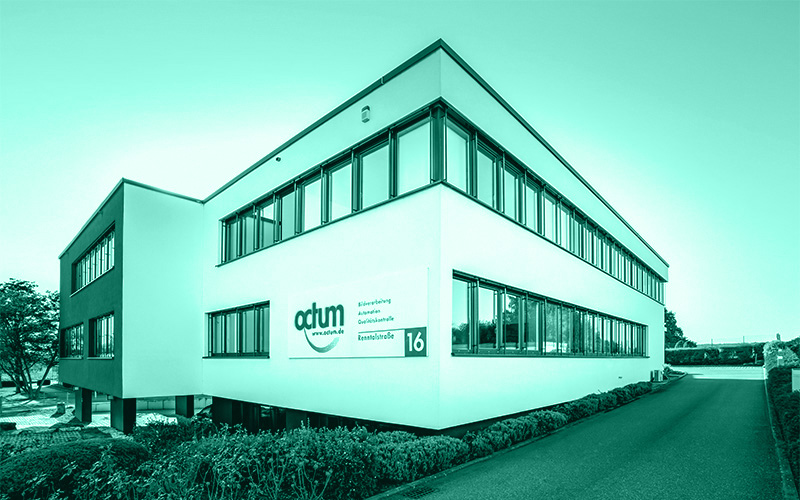
Founded in 1996, OCTUM GmbH develops and integrates industrial machine vision and AOI systems for automated quality control. Around 50 employees work at three locations in Ilsfeld, Rodenbach near Kaiserslautern and Charlotte in the United States, developing customized inspection solutions for industrial production processes.
As a system integrator, OCTUM combines cameras, optics, lighting, software, mechanics, interfaces and machine integration into a coordinated complete system. Each solution is designed around the specific product, inspection task, cycle time and conditions within the production environment.
OCTUM supports projects from the initial technical assessment through development and integration to commissioning, training and long-term system support.

Any questions?
Get directly in touch with our
experts on +49 7062 91494-0
or write to us using our contact form
OCTUM at a glance
- founded in 1996
- around 50 employees
- three locations in Germany and the United States
- more than 6,000 systems installed worldwide
- proprietary software solutions
- international project and service assignments
- experience in regulated manufacturing environments
- system integration for new and existing equipment
System integration instead of individual components
Machine vision must work as part of the production process
A machine vision system consists of more than a camera and inspection software. Reliable inspection under actual production conditions requires a coordinated combination of image acquisition, lighting, optics, software, product handling, machine control, operator interaction and data connectivity.
OCTUM therefore assumes responsibility for the complete inspection system. Together with machine builders, equipment manufacturers and manufacturing companies, we determine where inspection should take place within the process, which defect characteristics are relevant and how the inspection result should be incorporated into machine and quality processes.
Inspection stations can be considered during the planning of new machinery or retrofitted into existing equipment and production lines. OCTUM can also expand existing systems to accommodate new products, formats or inspection characteristics.
From the inspection task to a production-ready inspection system
Customized solutions for specific production requirements
Every project starts with the specific inspection task. Which characteristics need to be detected, measured, read or documented? Which defect patterns are relevant? Which cycle time, product handling and installation conditions must be taken into account?
For demanding applications, OCTUM investigates technical feasibility using real product samples. Suitable cameras, optics, lighting and evaluation methods are assessed. The results provide the basis for an inspection concept designed around the application and existing production environment.
OCTUM then supports system design, mechanical engineering, software configuration, integration, commissioning and acceptance. This transforms an inspection concept into a system that can be used reliably in production.
In-house software expertise
Software solutions for flexible and scalable inspection systems
In addition to integrating commercially available cameras, optics and lighting components, OCTUM develops proprietary software solutions for industrial machine vision and automated optical inspection.
OCVis, OCTUMISEr and CV-Inspect provide different software platforms for standalone inspection stations and complex multi-camera systems. Depending on the application, functions for image evaluation, format management, user management, result visualization, data communication and system diagnostics can be integrated.
Our in-house software expertise enables OCTUM to adapt inspection processes, operator concepts and interfaces to the specific machine and production process.
Experience in demanding industries
Inspection solutions for high quality and process reliability requirements
OCTUM machine vision systems are used in industries where products and components must be inspected reliably and reproducibly, often with complete inline inspection of every product.
OCTUM has particular experience in the following areas:
- pharmaceuticals
- medical technology
- packaging technology
- automotive
- metal and plastics processing
- electronics
- cosmetics
- additional industrial applications
In regulated manufacturing environments, requirements relating to user management, audit trails, traceability, data integrity, format management and documented system changes can also be addressed in addition to the inspection task itself.
The specific system configuration always depends on the product, production process, system environment and project-specific requirements.
Globally active – regionally rooted
Three locations for development, integration and support
OCTUM combines regional proximity with international project and service experience.
Charlotte, USA
OCTUM USA in Charlotte, North Carolina, supports customers in the United States as well as Central and South America. The location provides shorter travel distances, improved coordination across American time zones and technical support closer to customers’ production sites.
OCTUM systems are installed and supported worldwide. The three locations work closely together, combining local availability with the technical experience of the entire company.
Responsibility throughout the entire lifecycle
Our cooperation does not end with commissioning
Production equipment and quality requirements change over time. New product variants are introduced, formats are adapted, inspection criteria are expanded and technical components continue to evolve.
OCTUM therefore supports its inspection systems throughout their entire lifecycle:
- technical consulting and feasibility studies
- development and system design
- integration into machinery or production lines
- commissioning and acceptance
- operator and system training
- remote support and on-site service
- maintenance and repairs
- adaptation to new products and formats
- expansion of existing inspection tasks
- modernization and retrofit
This long-term support helps ensure that machine vision systems can continue to be used reliably for many years and adapted to changing production requirements.
What sets OCTUM apart
Technical experience and long-term project responsibility
OCTUM combines more than 30 years of industrial machine vision experience with in-house software development, technology-independent system design and comprehensive integration expertise.
Customers benefit in particular from:
- one point of contact for the complete inspection system
- more than 6,000 systems installed worldwide
- experience with new machine concepts and existing equipment
- proprietary software solutions
- expertise in traditional and AI-based evaluation methods
- experience in regulated manufacturing environments
- international project and service experience
- long-term support beyond commissioning
People, history and network
Get to know OCTUM
Behind our technical solutions are people, experience and an established network of customers, technology partners and industry associations.
Corporate management
Meet the people responsible for OCTUM.
>> Meet the OCTUM management team
Locations
Discover our locations in Germany and the United States.
>> Explore OCTUM locations
History
Follow the development of OCTUM since 1996.
>> Discover the history of OCTUM
Vision
Learn about the goals and values that guide our actions.
>> Discover the OCTUM vision
Partners and memberships
Learn more about our technological and professional network.
>> Explore our partners and memberships
Customer references
Learn how customers describe their cooperation with OCTUM.
>> View customer references
Discuss your inspection task with OCTUM
Are you planning new machinery, looking to retrofit an existing production line with machine vision or considering expanding an existing inspection system?
Describe your product, the relevant inspection task and the conditions within your production environment. Together, we will determine which technical solution is appropriate for your application.