



Custom Inspection Systems for Other Medical Devices
Automated Inline Inspection for Medical Device Manufacturing, Diagnostics and Healthcare
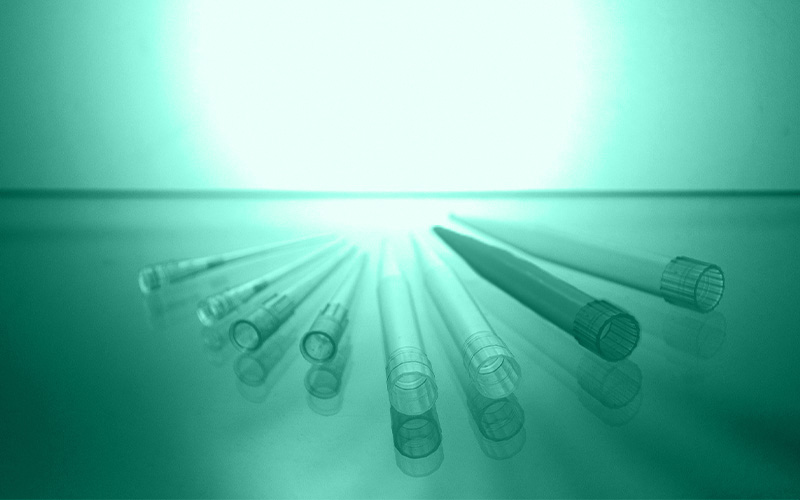
Medical devices and diagnostic components differ considerably in terms of geometry, material, surface properties and manufacturing process. The corresponding inspection requirements are equally varied: components must be assembled completely, meet the specified geometrical requirements, be free from visible defects and correspond to the intended product variant.
OCTUM develops custom machine vision and AOI systems for products that are not covered by a standardised inspection solution. Examples include blood collection tubes, eye-drop bottles, dialysis filters, medical containers, tubs, trays, cleanroom bags, calibrators and other components for medical device manufacturing, diagnostics and life science applications.
Each solution is adapted to the product, relevant quality characteristics, known defect types, material and surface properties, product variants, cycle time and installation conditions. The inspection system can be integrated directly into assembly, production or packaging processes and identify defective units within the available process window so that they can be rejected.
Depending on the application, inspection results can be documented, linked to product, batch or work-order data and made available for quality assurance and process analysis.

Any questions?
Get directly in touch with our
experts on +49 7062 91494-0
or write to us using our contact form
OCTUM transfers proven machine vision concepts to new products and production processes. Cameras, lenses, lighting, software, product handling and machine connectivity are designed as one coordinated system.
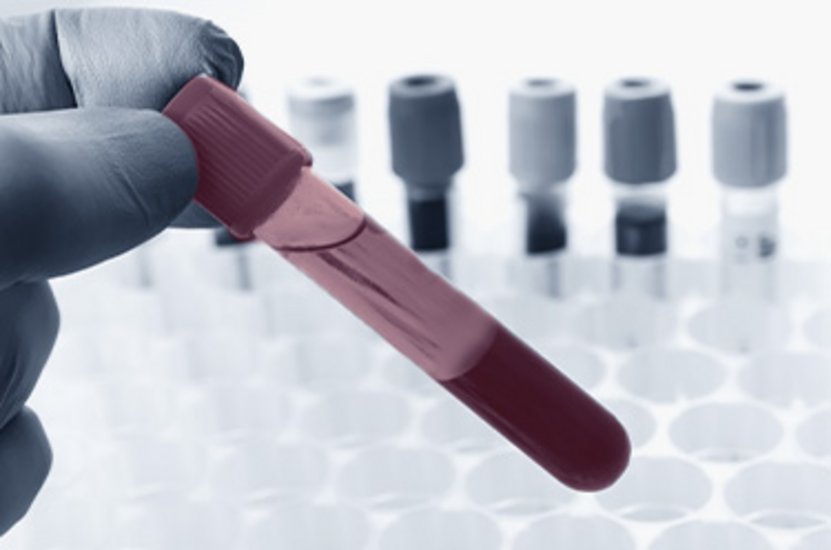
Inspecting Blood Collection Tubes
Blood collection tubes can be inspected without contact for geometrical characteristics and visible quality defects. Depending on the product and process, inspection tasks can include:
- Inner and outer diameters
- Roundness and concentricity
- Radial flash
- Under- and over-moulding
- Short shots and incompletely moulded areas
- Contour deviations
- Visible damage
The achievable inspection performance depends on factors including the material, transparency, colour, defect size, product handling and required image resolution.
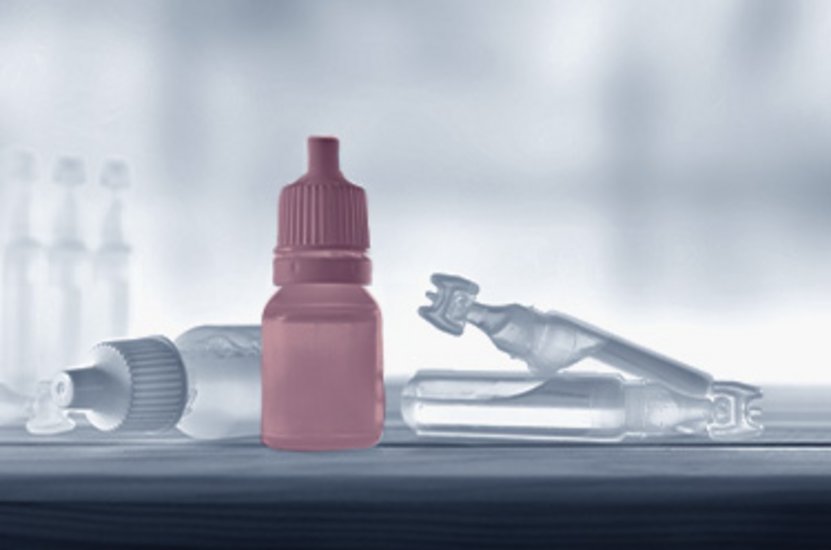
Inspecting Eye-Drop Bottles and Dropper Inserts
For eye-drop bottles, the machine vision system can verify whether the dropper insert and cap are present, whether the correct variants have been used and whether the components have been assembled correctly.
Possible inspection characteristics include:
- Presence of the dropper insert
- Correct dropper variant
- Insertion depth and complete seating
- Angular misalignment of the dropper relative to the bottle
- Correct cap assembly
- Position and orientation of components
- Visible assembly and surface defects
The inspection station can be positioned immediately after the relevant assembly or closing step so that defective units are identified at an early stage.
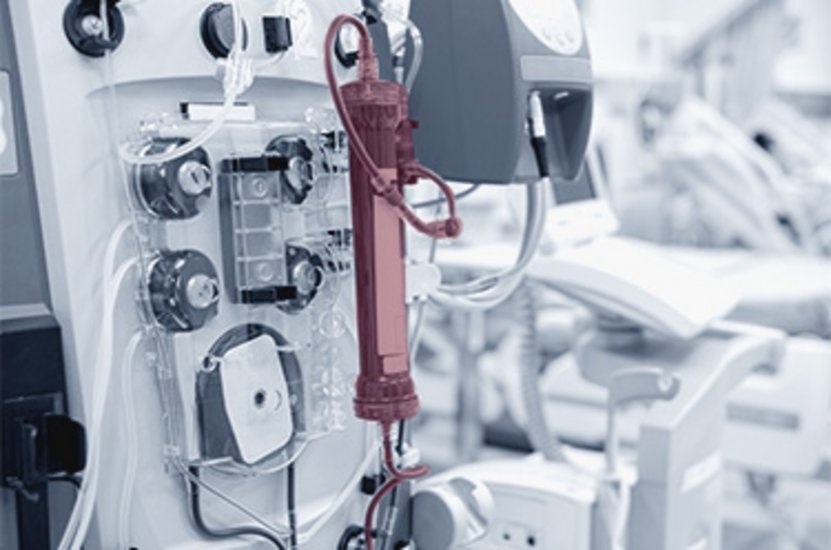
Inspecting Dialysis Filters
Dialysis filters and associated components can be inspected for geometrical characteristics, assembly conditions and visible surface features.
Depending on the filter design, possible inspection tasks include:
- Position, contour, length and diameter
- Geometry and shape deviations
- Visible surface defects
- Presence and position of the fibre bundle
- Component completeness
- Correct assembly and orientation
The areas that can be made reliably visible are evaluated using the actual filter, materials and component handling conditions.

Inspecting Medical Containers and Bottles
OCTUM develops application-specific inspection solutions for medical and pharmaceutical containers made from glass, plastic or metal.
Typical inspection tasks include:
- Product and variant inspection
- Presence and assembly of caps, tabs, closures and other components
- Component position and orientation
- Detection of visible scratches, cracks, breakage and stains
- Detection of mechanical defects such as damaged clips
- Contour, geometry and dimensional inspection
- Print, human-readable text and code inspection
Reflective, transparent or structured surfaces place particular demands on lighting, optics and image acquisition. These factors are considered during the feasibility assessment.
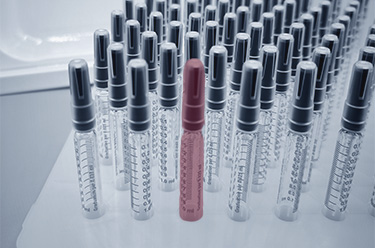
Inspecting Tubs, Trays and Syringe Nests
Tubs, trays and nests can be inspected for completeness, component loading and visible packaging characteristics before subsequent processing or packaging steps.
Possible inspection tasks include:
- Completeness within the syringe nest or tray
- Correct number and arrangement of components
- Product position and orientation
- Presence and position of a Tyvek cover
- Visible seal characteristics
- Print on the tub, tray or nest
- Variable text and 1D and 2D codes
Optical inspection evaluates visible sealing characteristics. It does not replace physical leak, seal-integrity or seal-strength testing.
Other Medical and Diagnostic Applications
Additional custom inspection solutions can be developed for products including:
- Cleanroom bags
- Pharmaceutical and medical films
- Calibrators
- Filter cartridges and filter components
- Web materials and film products
- Closures and assembly components
- Diagnostic consumables
- Medical containers and packaging components
The decisive factor is not the product designation alone, but the specific inspection task. OCTUM works with the manufacturer to evaluate which quality characteristics can be detected optically and how the inspection can be integrated reliably into the production process.
Surface, Defect and Contamination Inspection
Depending on the material, contrast and defect characteristics, the camera system can detect scratches, cracks, breakage, flash, deformation, foreign particles, deposits, stains and other visible deviations. The achievable detection limit is evaluated for the specific application.
Adapted to the Product, Defect Characteristics and Production Process
A reliable inspection solution results from the coordinated interaction of image acquisition, product handling, inspection software, machine communication and reject handling.
During system design, OCTUM considers factors including:
- Product geometry and accessible inspection surfaces
- Material, colour, transparency and reflection
- Relevant defect characteristics and required detection limits
- Tolerances and measurement requirements
- Product variants and format changes
- Cycle time and available inspection window
- Installation space and environmental conditions
- Triggers, encoders and other process signals
- Interfaces to the PLC, machine and higher-level systems
- Pass/fail decisions and reject handling
- Operation, recipe and format management
- Storage and transfer of inspection data
- Maintainability, serviceability and future expandability
Different camera technologies, lenses, lighting methods and evaluation algorithms are used depending on the application. The selection is based on the actual product and the defect characteristics that need to be detected.
>> Learn More About System Integration
>> Evaluate Technical Feasibility
Inspection Systems for Regulated Manufacturing Processes
In the manufacture of medical and diagnostic products, it may not be sufficient simply to identify defective units. User access, changes to inspection programs and quality-relevant inspection results may also need to be managed in a traceable manner.
Depending on the product, market and intended use, manufacturers may need to consider requirements arising from the European Medical Device Regulation, the In Vitro Diagnostic Medical Devices Regulation and ISO 13485. Where electronic records or electronic signatures are used, requirements arising from 21 CFR Part 11 may also be relevant.
These requirements apply to the manufacturer and its quality management system. An inspection system alone does not establish regulatory compliance. However, it can provide technical functions and documentation that support quality, qualification and validation processes.
Depending on the project, OCTUM systems can incorporate functions including:
- User, role and access management
- Audit trail
- Controlled recipe and format management
- Version and change history
- Storage of inspection and event data
- Product, batch and work-order assignment
- Data integrity and traceability
- Interfaces to the machine control system, MES and other systems
- Documentation supporting qualification and validation
The specific system configuration is defined with the manufacturer based on the intended use and its validation concept.
2. Evaluate Technical Feasibility
For new or demanding applications, OCTUM examines known-good parts, known-defect parts and, where applicable, limit samples under realistic conditions. Image quality, feature contrast, defect detectability, camera technology, lenses, lighting and evaluation methods are assessed.
Why Choose OCTUM for Custom Medical Device Inspection?
OCTUM has been developing machine vision and AOI systems for demanding production environments since 1996.
- Experience in industrial machine vision since 1996
- More than 6,000 systems installed worldwide
- Modular and custom inspection solutions
- Proprietary software solutions such as OCVis, OCTUMISEr and CV-Inspect
- Experience with medical, diagnostic and pharmaceutical applications
- Geometrical, dimensional and classification-based inspection methods
- Integration into new machines and existing production lines
- Combination of cameras, lenses, lighting, software and machine connectivity
- Support from feasibility studies and project planning through to service and training
For manufacturers, this means that the inspection task is not treated as an isolated camera function. Product handling, the production process, interfaces, data requirements and long-term operation are considered together.
Which Medical Devices Can OCTUM Inspect Using Machine Vision?
OCTUM develops inspection systems for products including blood collection tubes, eye-drop bottles, dialysis filters, containers made from glass, plastic or metal, tubs, trays, syringe nests, cleanroom bags, medical films, calibrators, filter components and other diagnostic or medical products.
Technical feasibility is evaluated for the specific product and the relevant defect characteristics.
Does Every Medical Device Require a Completely New Inspection System?
Not necessarily. Proven camera technology, software modules and system concepts can be reused and configured for specific products, depending on the application. However, product handling, lighting, lenses, inspection programs and interfaces are adapted to the individual inspection task.
Is 100% Inline Inspection Possible?
Depending on the product, inspection characteristics, production speed and machine design, the system can be engineered to inspect every unit produced. The detectability of each defect characteristic and the achievable inspection performance must be demonstrated for the specific project.
Can Transparent or Reflective Medical Devices Be Inspected?
Yes. Transparent and reflective products can generally be inspected optically. However, these surfaces require a specially adapted lighting, lens and image-acquisition concept. Whether the relevant defect characteristic can be made visible with sufficient contrast should be evaluated using actual samples.
Can Dimensions and Geometrical Characteristics Be Inspected?
Yes. Diameters, lengths, distances, contours, angles, roundness and other geometrical characteristics can be measured without contact. Resolution, tolerances, product handling, calibration and measurement system capability are considered for the specific application.
Can Visible Contamination and Surface Defects Be Detected?
Depending on the material, contrast, defect size and image-acquisition conditions, the system can detect foreign particles, stains, scratches, cracks, flash, breakage and other visible deviations. The achievable detection limit is determined for the specific project.
Can the Inspection System Be Integrated into an Existing Production Line?
Yes. OCTUM integrates machine vision and AOI systems into both new machines and existing production lines. Installation space, product handling, cycle time, control interfaces, operator interaction and reject handling are considered during system design.
When Is a Feasibility Study Recommended?
A feasibility study is particularly useful for new products, small or low-contrast defect characteristics, transparent or reflective materials, tight tolerances, demanding cycle times or limited installation space. It provides a reliable technical basis for decision-making before implementation.
Discuss Your Individual Medical Device Inspection Application
Would you like to inspect a medical, diagnostic or pharmaceutical product automatically, but cannot find your application among OCTUM’s existing product solutions?
Tell us about the product, relevant quality characteristics, known defect types, product variants, tolerances, target cycle time and planned installation conditions. Following consultation, please provide known-good parts, known-defect parts and limit samples wherever possible for technical evaluation.
Please also let us know about any requirements relating to machine connectivity, reject handling, documentation, traceability, measurement system capability or validation.
Together, we will determine which machine vision solution is technically suitable and can be integrated reliably into your production process.